


For details on the current board of the UNCAC Coalition, see here.
Americas Regional Seat
ACIJ seeks to facilitate access to clear and organized public information about corruption cases and trials in progress, foster transparency and accountability in the judiciary’s prosecution, and promote civic engagement against impunity. For this purpose, we have built an observatory of corruption cases, which allows citizens to follow the judicial status of corruption cases.
Other ACIJ actions in the field of anti-corruption include:
- The sanction of Argentina’s Freedom of Information Act, alongside other CSOs.
- The active participation in the process of elaboration of the Asset Declaration and Public Ethics Act in Argentina.
- The leadership, together with other organizations, of the “Anti-corruption Social Agreement” to create a roadmap of the actions that Argentina should implement in the fight against corruption;
- The production of a great amount of publications on Corruption in Argentina: https://acij.org.ar/category/temas/corrupcion-y-captura-del-estado/
 Clara Inés Lucarella is a lawyer who graduated from the University of Buenos Aires. She is a professor of “Human Rights and Guarantees” at the Law School of the University of Buenos Aires. Clara coordinates the Strengthening Democracy Program at the Civil Association for Equality and Justice (ACIJ). She is the author of several documents published by ACIJ about the judiciary, transparency and corruption, and citizen participation. She has led several projects in ACIJ related to access to information, corruption, the role of the judiciary, among others. Various strategies were used in many of these projects, such as the use of public information, open data and the use of new technologies. She has also represented ACIJ in national and international civil society networks linked to these issues.
East Asia, Central Asia and Pacific Regional Seat
Indonesia Corruption Watch is an organisation that focuses on investigating corruption cases in Indonesia. Since 1998 when ICW was founded, ICW has reported numerous major corruption cases involving public officials and state apparatuses, including police. Furthermore, ICW has also been involved in promoting anti-corruption and democracy values through policy advocacy. The Law on Public Information Disclosure, Law on Witness and Victim Protection, Law on Anti-Money Laundering, are some of the regulations that ICW has advocated for, to name a few.
ICW acknowledges the hardship of corruption eradication and efforts, that is why ICW not only focuses on corruption cases handling and policy advocacy, ICW also builds and constantly broadens the CSO’s network and capacity. ICW has been known to provide capacity building for fellow CSOs, journalists, and students to develop their strategies in combating corruption.
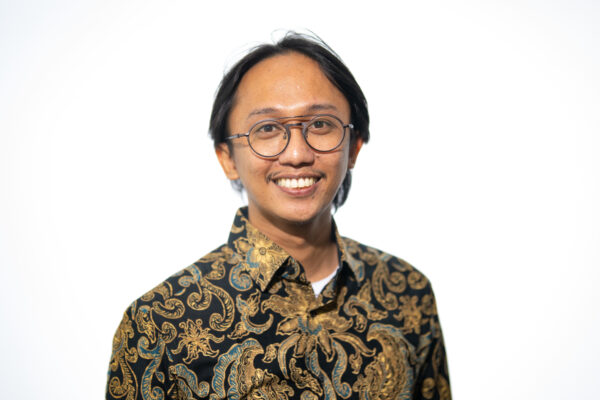
Wana Alamsyah holds a Bachelor’s Degree in Computerised Accounting. In December 2023, Wana graduated from the Managing Global Governance (MGG) Academy in Germany held by IDOS (German Institute of Development and Sustainability). He is a Head of Knowledge Management Division in Indonesia Corruption Watch (ICW) with eight years of experience working on anti-corruption and democracy in the organisation. Wana’s daily scope of work is to implement works related to knowledge management including collecting, managing, and sharing products of knowledge that are produced by seven divisions in ICW.
With his experience participating in cybersecurity training in 2019 in the Philippines, Wana is also responsible to provide assistance on digital security of the organisation, ICW’s staff members, and partners. Wana specialises in conducting investigations in the public procurement sector using Open Source Intelligence (OSINT). Wana is also a trainer of access to information, investigation, and cybersecurity.
Europe Regional Seat 1
Transparency International Georgia is Georgia’s leading anti-corruption watchdog, advocacy-based think tank and local chapter of the global anti-corruption movement – Transparency International.
TI Georgia’s main aim is to support building and empowering state institutions, develop good governance and the rule of law, ensure the transparency and direct accountability of the state institutions, support fair and democratic elections (for this aim including election observations) and protect universally recognized human rights.
TI Georgia is committed to eradicating all forms of corruption in Georgia. The efforts in achieving this goal include government monitoring, high-level advocacy, mobilizing for change, and empowering other anti-corruption actors. In all of its activities TIG undertakes to represent the interests of those who have been or could be mistreated by poor governance. This includes vulnerable social and minority groups, business companies, civil servants, journalists – anyone who is affected by unfair government policies and practices.
Find more at: www.transparency.ge
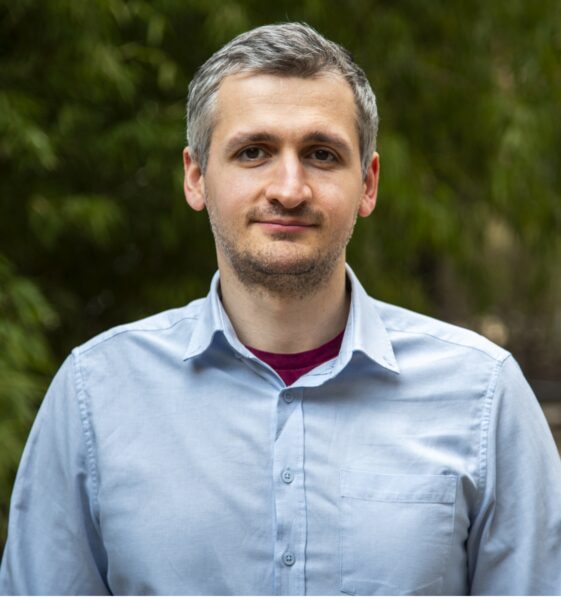 Sandro Kevkhishvili is the Anti-Corruption Program Manager and has led Transparency International Georgia’s versatile anti-corruption team since 2021. Under his supervision the team combines think-tank, watchdog and advocacy activities to push for change in the areas of anti-corruption and good governance in Georgia.
To achieve impact, a holistic approach is used. The process starts with:
1. Analysis of specific legal or practical shortcomings in the wider integrity system, e.g. institutional infrastructure, conflict of interest and incompatibility, asset declaration system, whistleblower protection etc.; 2. Continues with creation of evidence to substantiate the negative impact of said shortcomings, mostly done through open source investigation techniques using open data-based tools developed in-house; and 3. Finishing with advocacy on both national (e.g. proposing draft laws to the Parliament) and international level (e.g. EU integration process, Open Government Partnership).
Previously, Sandro had 8 years of experience working in the Georgian civil society on anti-corruption related issues. Sandro holds a Bachelor’s Degree in Anthropology from Williams College (MA), and a Master’s Degree in Sociology from Ilia State University.
Europe Regional Seat 2
Transparency International Ukraine (TIU) is an accredited chapter of the global movement Transparency International with a comprehensive approach to development and implementation of change to reduce corruption levels. Within its strategic priorities, TIU aims to mitigate corruption risks at the national and local level by increasing transparency and accountability in authorities’ work, engaging the maximum number of allies, and ensuring an effective system of punishment for corruption-related violations.
Since 2014, the organisation has focused on monitoring anti-corruption reform implementation and improvement of anti-corruption policy. TIU played a major part in the launch of the High Anti-Corruption Court and continues to monitor this and other anti-corruption institutions’ work.

Andrii Borovyk has been Executive Director of Transparency International Ukraine since January 2019 (earlier, in 2016-2018, he worked as Chief Operating Officer in the organisation). Under his leadership, the TI Ukraine team has grown from 18 to 45 people, delivering its goals in fighting corruption. Andrii has dramatically contributed to the institutional development of the organisation, coordinating fundraising activities that secured over USD 2.5 million to the organisation in grants. He was a civic oversight council member at the National Anti-Corruption Bureau of Ukraine (2018) and member of the re-attestation commission within the Prosecutor General’s Of ice (2019), member of the anticorruption prosecutors’ selection commission (2020). Also, since 2017 Andrii has been a member of ethics committee in Ukrainian Network of Integrity and Compliance. He is a Board member of the CSO “Independent Defence Anti-Corruption Committee (NAKO)”.
Andrii has advanced the Ukrainian anti-corruption agenda at the international level and significantly contributed to enhancing worldwide initiatives for corruption elimination by participating in international events and developing working relations with representatives of international institutions. Before taking up a position at TI Ukraine, he worked as a Head of Administration Division in the Reforms and Quality Assurance Unit in the General Prosecutor’s Office with a team of Georgian reformers and as an investment analyst. He has valuable experience in business consultation, investment analysis, building business processes in the public sector and capacity development of NGOs.
He was elected Treasurer of the board in September 2022, and re-elected in this role in September 2023.
Middle East and North Africa Regional Seat
I WATCH is a watchdog organization founded after the Tunisian Revolution in 2011. I WATCH is non-profit and independent organization that aims to combat financial and administrative corruption and enhance transparency in political events and electoral process. It has been advocating for more transparency and openness in the work of the government. Starting from 2016, I WATCH started persecuting corrupt businessmen and government members and taking them to the court. The court cases are the results of investigations done by the Yakedh Advocacy and Legal Assistance Center ( YALAC).
In November 2013, I WATCH became official contact point for Transparency International in Tunisia and starting from 2019 I WATCH became an official chapter of TI.
 Wajdi Balloumi, President of I-Watch, was a Fulbright Foreign Language Teaching Assistant with an academic background immersed in Political Science and Development Studies at Southern Illinois University, Edwardsville. He previously worked as a project manager at the Center for Entrepreneurship and Executive Development (CEED) on programs to strengthen Tunisian businesses by developing, connecting and mentoring entrepreneurs. He has also worked to advance women rights and empower youth and minorities through building a democratic environment, solid policies, international cooperation and fighting corruption.
Wajdi is an awardee speaker for the Intercultural Innovation Award —a partnership organized by the United Nations Alliance of Civilizations and the BMW Group at New York. He has also been an active member of various civil society organizations including the Tunisian American Alumni Network (TAAN). Wajdi holds a bachelor’s degree in English and international relations and is working on finishing his master’s thesis in international relations.
South Asia Regional Seat
Established in 2008, Centre for Peace and Development Initiatives (CPDI) is a CSO with focus on, among others, right to information (RTI), political finance reforms, transparency in governance, inclusive and participatory budgeting, civic engagement, and public accountability. CPDI has extensive experience of policy research, advocacy, capacity building, community mobilization and engagement with political parties, legislatures, Federal/ provincial and local governments, and various accountability forums like Ombudspersons, information commissions and anti-corruption bodies.
Its work on RTI has been quite impactful, as it has led to (a) enactment of RTI laws at the Federal level and in all the four provinces; (b) enhanced capacity of journalists and community leaders in using RTI laws; and (c) important decisions/ judgments by information commissions and courts regarding disclosure of information.
CPDI’s budget work emphasises participatory budgeting, as well as maximum proactive disclosure of budget information, especially regarding allocations, releases, expenditures, and audits.
It has also been demanding political finance reforms to ensure that political parties have incentives to raise finances in a legitimate and transparent manner; and are held accountable for lack of transparency or using dubious methods to raise political finance. Its recent/ current donors/ partners include the USAID, EU, NED, GIZ, DRL, Global Affairs Canada and FCDO.
Website: www.cpdi-pakistan.org
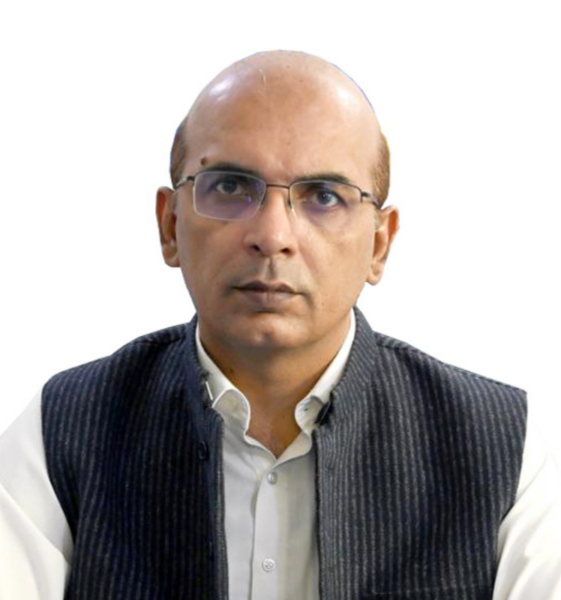 The Executive Director of CPDI, Mukhtar Ahmad Ali, has around 25 years of experience in the public/ development sectors with focus on RTI, budget transparency, political finance reforms, democratic development, local governments, and electoral reforms. He is a prominent RTI activist, who has led or extensively contributed to numerous capacity building, policy advocacy, and public awareness programs.
He has served as Information Commissioner in the Punjab Government, and as Chief of Party and Team Leader of large governance focused USAID/ UKAID funded projects. He has successfully pursued hundreds of RTI related cases in information commissions and courts. He has served on the boards of prominent CSOs like the Trust for Democratic Education Accountability (TDEA), Free and Fair Election Network (FAFEN) and Institute of Rural Management (IRM).
He has been on the Advisory Committee of the Federal Tax Ombudsman; and has contributed to drafting of official bills on the RTI and whistle-blowers’ protection. He is a visiting faculty of the National Institute of Management; National Management College; Balochistan Civil Service Academy; Local Government Academy; and the Federal Election Academy. He has an M. Phil degree in Development Studies (with distinction) from the Institute of Development Studies (IDS), University of Sussex, UK.
Sub-Saharan Africa Regional Seat 1
Anti-Corruption Coalition Uganda (ACCU) was formed in 1999, with the sole objective of providing a forum through which various anti-corruption actors can enhance their capabilities and act as one strong voice and force that can effectively engage the government on issues of corruption. The organization brings together like-minded organizations and individual actors whose preoccupation is exposure and advocacy in the fight against corruption in Uganda.
ACCU works with national Civil Society Organizations engaged in the accountability sector. At the local level, ACCU works with and through 15 Regional Anti-Corruption Organisations spread out in various parts of Uganda. We also work with state agencies, media, academia, traditional and religious institutions, and development actors to advance the governance and accountability agenda in Uganda.
As the leading anti-corruption CSO in the country, ACCU has the convening, coordinating and catalysing power to galvanize civil society around governance and anti-corruption. ACCU’s interventions have impacted millions of lives in Uganda through the implementation of over 40 projects. Our vision is to see “A transparent and corruption free society”. Our mission is “To empower citizens to actively and sustainably demand for transparency and accountability from public and private sectors”. Our website is accessible at: www.accu.or.ug.
 Marlon Agaba has over 14 years of progressive experience in programme management, development communication, and civic engagement in Uganda. He has worked with the Anti-Corruption Coalition Uganda since 2015, first as the Communications Manager, later as Head of Programmes, and currently as the Executive Director. He holds a Master’s Degree in Journalism and Communication and postgraduate training in Project Planning and Management.
Mr. Agaba has enormous experience engaging governance and accountability actors in Uganda. He has provided input into several anti-corruption laws, policies and strategies in Uganda. He has wide experience engaging state and non-state actors on issues related to transparency and accountability. In 2021, Mr. Agaba led the team that developed the CSO parallel report on the implementation of the UNCAC in Uganda. He has designed several anti-corruption campaigns on issues including voter bribery, wasteful public expenditures, and implementation of anti-corruption laws.
Mr. Agaba has conducted several studies, policy analyses and research papers on a myriad of contemporary issues. He is a regular panellist and pundit in mainstream media on governance issues in Uganda. He has consulted for several organisations. He is also a regular panellist on government accountability platforms. He possesses impeccable experience in managing governance projects.
Sub-Saharan Africa Regional Seat 2
Since 1997, the Africa Network for Environment and Economic Justice (ANEEJ) has championed the call for stoppage of illicit financial flows from Nigeria and other developing countries to the secrecy jurisdictions in western countries. It has, in the same vein, championed the campaign for the repatriation of looted assets of
Nigeria stashed in Western banks and was active in the call for a UN instrument against corruption, money laundering and illicit financial flows.
ANEEJ worked with over 100 civil society organisations while hosting the Secretariat of the Publish What You Pay (PWYP) Campaign in Nigeria from 2004-2008 and the Nigerian Network on Stolen Assets. The organisation also coordinated CSOs that were involved in monitoring of repatriated Late General Sani Abacha loots under the Public Expenditure Management and Financial Accountability Review (PEMFAR), a tripartite agreement between the World Bank, Civil Society and Nigerian governments. ANEEJ facilitated the Nigerian CSOs engagement in the Second Review Cycle of Chapter II and V of the UNCAC in Nigeria.
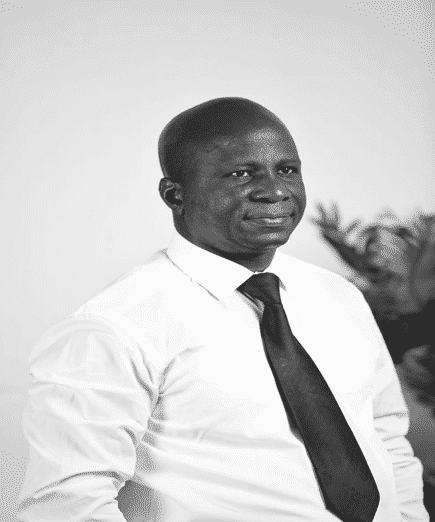 Rev. David Ugolor is the Executive Director of ANEEJ. He has over two decades of working experience on anti-corruption work and also has Master Degrees in Agricultural Economics and the Study of Corruption from the Universities of Benin and Sussex.
He has made several presentations on corruption, Illicit Financial Flows and Sustainable Development at both local and international workshops, and seminars. David Ugolor has participated as a resource person in several UN meetings and also facilitated civil society engagement with Open Government Partnership, currently serving as the Co-Chair of the Anti-Corruption Working Group of the Open Government Partnership Nigeria. David Ugolor facilitated the Pre-Global Forum on Asset Recovery consultation in Nigeria and participated in the GFAR panel debate held in December 2017, in Washington DC.
Rev. David Ugolor is presently coordinating the implementation of independent CSO monitoring of $322.5millions of the Abacha loot which will be used for conditional cash transfer programmes in Nigeria. The Conditional Cash Transfer Programme is one of the key social investment policies of the Federal Government of Nigeria that is targeting poor Nigerians and will help address the issue of reaching the sustainable development goals in Nigeria.
He was elected as a Vice Chair of the board in September 2022 and re-elected in this role in September 2023.
International Member Organisation Seat 1
Created in 2015, the Open Data Charter works via a set of 6 core Principles to help organisations in their openness journey. With a Network of over 170 governments and civil society organizations, we promote policies and practices that enable governments and CSOs to collect, share, and use well-governed data, to respond effectively and accountably to the following areas of work: anti-corruption, climate action, gender, artificial intelligence and data rights. We participate in global and regional discussions, forums and coalitions like the Open Governmennt Partnership, UNCAC Coalition, the UN Global Digital Compact, COP, the Global Alliance for Care and others.
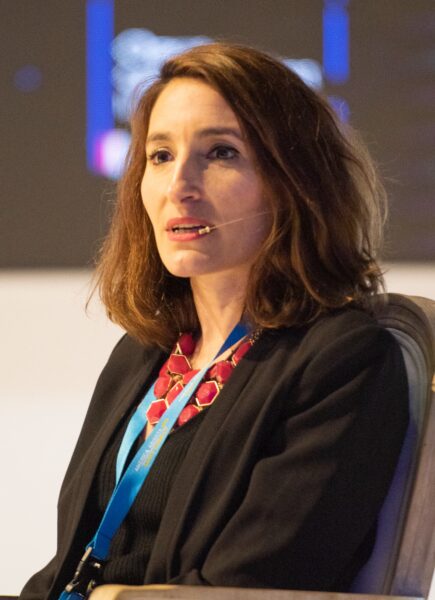 Natalia Carfi is the Executive Director of the Open Data Charter since 2021 and a member of the OGP Steering Committee since 2022. She has a longstanding experience in open data and open government, having worked in this field for over 15 years.
Natalia is the Executive Director of the Open Data Charter, and prior to that, over a decade of experience working in government, specialising in open government initiatives and civil society engagement projects. As a longstanding and respected member of the open data community in Latin America, she is well connected to civil society organisations and public officials across the world. She is the former Open Government Director for the Undersecretary of Public Innovation and Open Government of Argentina, also Open Government coordinator for the Digital Division of the Government of Chile and for the City of Buenos Aires.
She is part of the Open Data Leaders Network and the Academic Committee of the International Open Data Conference. Since October of 2022 she is part of the Open Government Partnership Steering Committee, representing global civil society.
International Member Organisation Seat 2
The Open Contracting Partnership is an independent non-profit public charity 501(c)(3) working in over 50 countries. We are a silo-busting collaboration across governments, businesses, civil society, and technologists to open up and transform government contracting worldwide. Bringing open data and open government together, we make sure public money is spent openly, fairly and effectively on public contracts, the single biggest item of spending by most governments. They are a government’s number one corruption risk and they are vital to make sure citizens get the services that they deserve.
Through open contracting, we drive massively improved value for money, public integrity and service delivery by shifting public contracting from closed processes and masses of paperwork to digital services that are fair, efficient and ‘open-by-design’. We support reformers from government, business and civil society to make reforms stick, help their innovations jump scale, and foster a culture of openness around the policies, teams, tools, data, and results needed to deliver impact.
 Kristen Robinson leads Open Contracting Partnership’s advocacy, building on her 17 years’ experience in policy advocacy, strategic communications and campaigning. She is passionate about all things open government, open tech and open data. As Communications and Campaigns Director at the Web Foundation, she drove global multi-stakeholder coalition building, policy advocacy campaigns and media relations work with a focus on normative and narrative change. She managed external communications for web inventor Sir Tim Berners-Lee in his capacity as founding executive director.
She has consulted and advised a number of NGOs, multilateral organizations, governments and businesses on their public reputation and external affairs, including during high stakes crises in the areas of peace and security, financial crime, and corruption. Her consultancy clients have included: Kofi Annan Foundation, Bill & Melinda Gates Foundation, Mo Ibrahim Foundation, Africa Progress Panel, Google, Orange, The Elders, Omidyar Network, UN Women, UN Population Fund and a number of governments in the Middle East, Europe, Africa and Central Asia. Kristen began her career with roles for the US and German governments in investment and trade policy, with stints in Mexico City and Shanghai. She graduated from the London School of Economics with an MSc in International Political Economy, and speaks Spanish, French and German proficiently.
Individual Member Seat
 Naomi Roht-Arriaza is an academic specializing in human rights, environmental and tort law. She teaches at the University of California, Hastings Law and has worked with civil society groups, mostly in Latin America, on anti-impunity and accountability for over 30 years. Naomi came to anti-corruption work out of a sense that the protection of human rights and the environment is increasingly being undermined and impeded by the control of state institutions (and business elites) by kleptocrats who subvert controls, create impunity for themselves, and reconfigure the state to support private gain rather than the public good.
Naomi has written on access to justice for victims of grand corruption, reparations for corruption, environmental protection and corruption at moments of transition, and similar subjects. She also worked with a number of organizations on making more effective the interface between anti-corruption and human rights work. Over the years, Naomi has been a board member of several organizations dedicated to human rights and the environment.
Honorary member seat

Gillian Dell currently serves as Chair of the UNCAC Coalition and is global advocacy lead at Transparency International (TI). She was previously head of the TI conventions unit for over fifteen years, covering international anti-corruption instruments and their review mechanisms, including the UN Convention against Corruption.
Gillian was founding co-convenor of the UNCAC Coalition in 2006 (originally called the Coalition of Civil Society Friends of the UNCAC) and continued in the role of convenor until the election of the first UNCAC Coalition board in 2011. From 2006 until 2018, she led the TI team that provided the UNCAC Coalition’s secretariat, coordinating the Coalition’s submissions and activities at UNCAC meetings. Apart from her current role as Chair of the UNCAC Coalition, she is also Chair of the UNCAC Coalition Working Group on Grand Corruption and State Capture. She was previously elected Vice Chair of the Coalition in October 2021, Co-Chair in September 2022, and most recently as Chair in September 2023.
Gillian has authored or co-authored reports, papers, statements and blogs on a range of anti-corruption topics, including conventions implementation and monitoring, countering grand corruption, corruption and human rights, victims’ remedies and corruption and organised crime. From 2005 to 2013 and again in 2018, 2020 and 2022, Gillian co-authored TI’s progress report on enforcement of the OECD Anti-Bribery Convention, now known as the Exporting Corruption Report. In 2023, she authored a TI Working Paper on Tackling Grand Corruption Impunity, which proposes special measures against grand corruption.
Gillian studied law at the University of California-Berkeley and at the Université Libre de Bruxelles and has a BA degree from Oxford University. Prior to joining Transparency International (TI) in 1997, she worked as a lawyer in a New York law firm; as a research fellow on international trade law issues at the Freie Universität Berlin; as a consultant at the United Nations; and as a law lecturer and administrator at an American university study centre in Berlin. She has also worked with several human rights organisations.