


25 March 2026 –
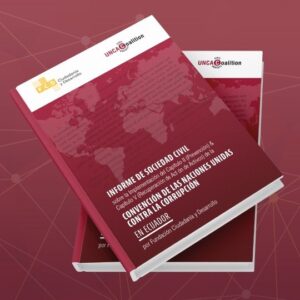
The UNCAC Coalition offers support to civil society organizations (CSOs) that want to become involved in and contribute to the UNCAC implementation review process in their respective country. Only groups from countries where a parallel report has not been produced yet are eligible.
Please note that there is limited funding available, so the sooner you apply, the better.
What we support:
The UNCAC Coalition offers technical support, as well as limited financial support, to CSOs that want to use the UNCAC implementation review to advance their mission. In particular, the Coalition supports CSOs in:
- producing a civil society parallel report, covering all or selected articles of the second cycle of UNCAC reviews, which deal with chapter II (preventive measures) and chapter V (asset recovery),
- conducting follow-up activities on the report’s main findings and recommendation (see more information here).
- making other forms of contributions to the implementation review process.
Support we offer
The Coalition can offer the following support to CSOs:
Technical support:
- Guidance materials (guidelines, questionnaires, report templates) for researchers:
- Helpdesk support for the researcher via email/Zoom/calls
- Peer review
- Editing
- Translation
- Graphic design for the report
- Dissemination
Financial support:
- The Coalition may be able to provide limited financial support for the production of a parallel report and other advocacy activities, such as covering the cost of a researcher. The level of support depends on the scope of activities.
- We give preference to ODA recipient countries.
- The funds can only be transferred after the delivery and approval of outputs.
Requirements
Your organization should fulfil the following criteria:
- You are a registered organization
- You are a non-profit civil society organization
- You have a track record of work, including written outputs such as policy reports, on issues that link to provisions of the UNCAC
- You have an idea of how you would like to use the UNCAC implementation review to advance your organization’s mission
- You have in-house capacity, or are confident that you can find a qualified researcher/consultant to contribute to the UNCAC review process and to produce a parallel report
- The contact person and the researcher can work in English, Spanish or French (this can be the same person)
- You are willing to cooperate with the UNCAC Coalition’s Hub team to ensure a high-quality report
- Your organization is able to sign a service contract and receive payment which will be issued after outputs are submitted
Membership of the UNCAC Coalition is not a prerequisite to write a civil society parallel report, but it is recommended to apply.
Before you apply
To apply, we ask you to fill the form linked below. Before you do that, please take some time to research and reflect on the following aspects:
- When is the UNCAC implementation review taking place in your country (for more info, see the UNCAC Coalition’s UNCAC Review Status Tracker here) – note that the actual review process may be behind schedule, so best to inquire with the government focal point.
- How can your organization use the review process to advance its mission?
- How would you like to contribute to the review process? Are you interested in producing a parallel report?
- If so, which chapters/articles do you want to cover?
- Do you have the capacity, including an experienced researcher, to draft a parallel report?
- See examples of civil society parallel reports here.
- Only groups from countries where a parallel report has not been produced yet are eligible. This means we cannot accept applications for reports from the following countries – by region:
- Africa: Burundi, Zimbabwe, Guinea, Democratic Republic of the Congo, Liberia, Togo, Uganda, Ghana, Benin, Zambia, Ethiopia, Chad, Tunisia, The Gambia, Madagascar, Nigeria, Cameroon, Rwanda, Kenya.
- Latin America and the Caribbean: Ecuador, Paraguay, El Salvador, Costa Rica, Colombia, Brazil, Chile, Venezuela, Argentina, Puerto Rico, Honduras, Mexico, and Guatemala.
- Asia-Pacific: Nepal, Bahrain, Kyrgyzstan, Cambodia, Mongolia, Pakistan, Papua New Guinea, Uzbekistan, Bangladesh, Sri Lanka.
- South-West Asia and Northern Africa: Tunisia, Yemen, Palestine, Iraq.
- Europe: Serbia, Montenegro, Ukraine, Moldova, Armenia, Georgia, North Macedonia, Bosnia and Herzegovina, Albania.
- Reports from Mozambique, Lebanon, the Maldives and the Dominican Republic are currently in progress.
How to apply
As a first step, please fill out the form below. Once we have received your information, we will get back to you within a few weeks to discuss the next steps:
Application form for support to produce a civil society parallel reports on UNCAC implementation
Questions
In case you have any questions, please feel free to contact danella.newman@uncaccoalition.org.