


In July 2010 the IRG met for the first time in Vienna and adopted the guidelines for governmental experts and the UNCAC secretariat – the UN Office on Drugs and Crime (UNODC) – in the conduct of a country review.
How does the UNCAC review mechanism work?
The review process comprises two five-year cycles:
- The first cycle (2010–2015) covers chapter III on criminalisation and law enforcement and chapter IV on international cooperation
- The second cycle (initially 2015–2020) covers chapter II on preventive measures and chapter V on asset recovery. The 10th UNCAC Conference of States Parties extended the review cycle to June 2026, as a result of significant delays.
Approximately a quarter of the states parties are scheduled for review in each of the first four years, with the fifth year reserved for unanticipated delays or countries acceding during the review cycle.
A country review process follows these phases:
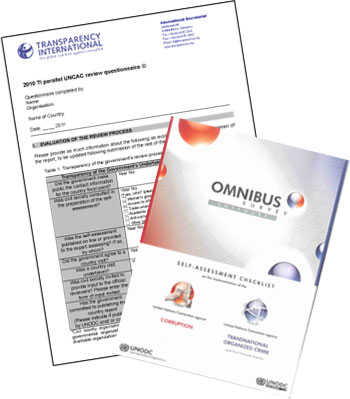
- Phase I: self-assessment: UNODC informs the state party that it is under review. The state party identifies a focal point to coordinate the country’s participation in the review and then fills out a standardised self-assessment checklist.
- Phase II: peer review: Two reviewer countries – decided by lots – provide experts to form an expert review team. The team conducts a desk review of the completed self-assessment checklist. It may require further information from the focal point and direct dialogue through conference calls, or a country visit if agreed by the country reviewed.
- Phase III: country review report and executive summary: With the assistance of UNODC, the expert review team prepares a country review report (80–300 pages) and an executive summary of this report (7-12 pages). The country review report and executive summary are sent to the focal point for approval. In cases of disagreement, the reviewers and the contact point engage in dialogue to arrive at a consensual final report, which is published in full only with the agreement of the country under review. The executive summary, once finalised upon agreement, is translated into the six official languages of the United Nations and made available as a document of the Implementation Review Group.
What is the role for civil society?
The UNCAC recognises the crucial role of civil society in successful anti-corruption efforts: supporting governments to meet their UNCAC obligations and contributing to ongoing assessments of their performance through the UNCAC review process.
Civil society holds an important role as an independent observer of governments’ implementation of the UNCAC and of the transparency of the review process.
Advocate for a transparent and inclusive review mechanism
Civil society participation is limited by the UNCAC review mechanism guidelines. These guidelines provide the discretion to countries to decide on the extent of participation and transparency in their country reviews. It is up to them to decide whether to allow:
- Civil society involvement in the preparation of the self-assessment checklist
- Publication of information on the focal point
- Publication of the self-assessment responses online or access to the responses directly to civil society organisations upon request
- Inclusion of some form of civil society dialogue with the peer reviewers, including an opportunity to submit written reports
- An in-country visit with an opportunity for civil society groups and other stakeholders to meet and provide oral and written input to the official reviewers
- Publication of the full country review report (it is only mandatory to publish the executive summary)
It is therefore important that CSOs actively advocate for transparency and participation during the UNCAC review process in their country.
Advocate for compliance with your country’s UNCAC commitments
UNCAC-based advocacy aims to achieve specific improvements in a country’s anti-corruption system by referencing UNCAC standards and calling for the government to fulfil its UNCAC commitments.
Civil society input is valuable at many stages of the review process (see phases in the review process above). Civil society organisations may:
- Monitor implementation of the UNCAC themselves and produce a parallel review report as a contribution to the review process
- Comment on the official country review report
- Follow-up implementation of the country review report recommendations
Key resources
- Using the UN Convention against Corruption to advance anti-corruption efforts: A guide: Arabic, English, French, Spanish
- Overview of the entry points for civil society and key advocacy objectives during the review process
- Guides for drafting civil society reports:
Training Videos
What happens in the UNCAC review process? How can civil society participate? Our training videos will guide you through the key steps of the process and through the key decisions which civil society organisations need to make.
Civil Society and the UNCAC Review Process
UNCAC Review Process: Excerpts from the Laxenburg Training
Introduction
Chapter 3: The Review Process
Chapter 5: Civil Society Participation
Chapter 2: The Review Actors
Chapter 4: The Review Tools
Chapter 6: Civil Society Report
Need more guidance?
- Training materials and presentations from training on the UNCAC review process from June 2013
- Tips for accessing government information to participate and input into the review process
- Advocacy information including how to develop an advocacy strategy and key advocacy points
Official UNCAC Review Documents
- General information on the UNCAC review process can be found on the UNODC website section dedicated to the UNCAC
- The terms of reference, guidelines for review experts, and country report blueprint are available here
- The UNCAC legislative guide, technical guide and travaux preparatoires will help you understand better the UNCAC
- The self-assessment checklist which governments are using to prepare their self-assessment can be downloaded here